
Newborn Hearing Screenings in Katy, TX
Early Hearing Screening to Support Healthy Development
Hearing plays an essential role in early language, communication, and learning. Newborn hearing screenings help identify potential hearing concerns as early as possible and allow families to take timely steps to support their child’s development.
At the Davies Institute for Speech & Hearing, newborn hearing screenings are provided by experienced audiologists using gentle, age-appropriate testing methods designed specifically for infants.
What Is a Newborn Hearing Screening?
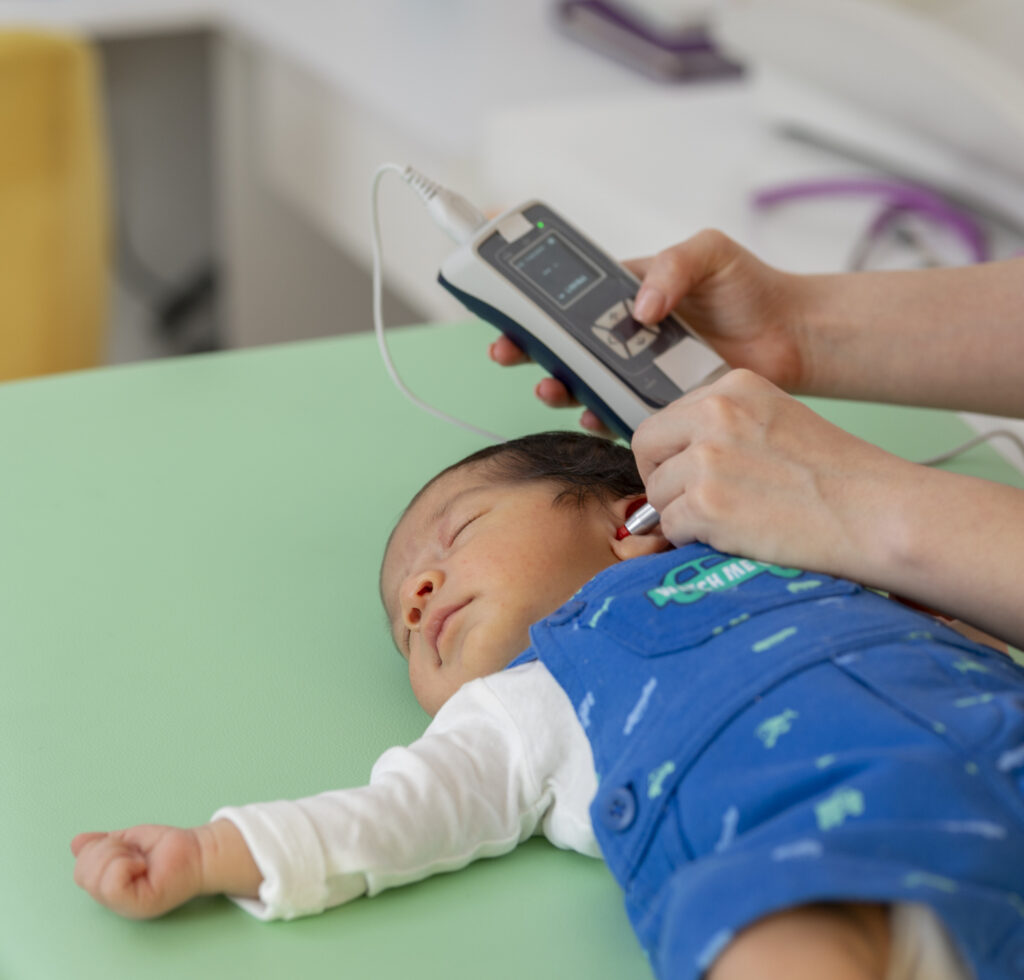
A newborn hearing screening is a non-invasive test used to check how a baby’s auditory system is responding to sound. While many hospitals perform an initial hearing screening shortly after birth, some babies may not pass that screening or may need additional follow-up testing.
Depending on your baby’s needs, screening may involve a brief hearing screening that checks responses to certain sound frequencies or a more in-depth diagnostic test, such as an auditory brainstem response (ABR), which looks at how sound signals travel from the ears to the brain. To do these tests, we’ll place small sensors on your baby’s head to measure how their auditory system and brain respond to sound.
If further testing is recommended, our audiology team will take the time to explain the results, what they mean for your child, and what steps come next.
Signs Your Baby Might Need a Hearing Screening
Your baby may benefit from an in-depth newborn hearing screening if:
- They did not pass a hospital hearing screening
- They were born prematurely or had medical complications at birth
- There is a family history of hearing loss
- They had extended stays in the NICU
- Frequent ear infections
- Parents or caregivers have concerns about hearing or responsiveness to sound
Reach Out Today to Get Started
If your baby did not pass a hospital hearing screening, or if you have concerns about their hearing, early follow-up is important. Our team is here to answer your questions, provide reassurance, and help you determine whether a newborn hearing screening or diagnostic evaluation is appropriate.