
Auditory Processing Therapy in Katy, TX
Giving Children Tools to Understand What They Hear
When a child hears sounds clearly but struggles to understand speech, it can affect their ability to learn and their confidence. Auditory Processing Therapy supports children whose brains have difficulty processing and organizing sound, even when hearing tests appear normal.
At the Davies Institute for Speech & Hearing, auditory processing therapy is designed to provide clear answers, structured support, and a path forward for families navigating these challenges.
What Is Auditory Processing Therapy?
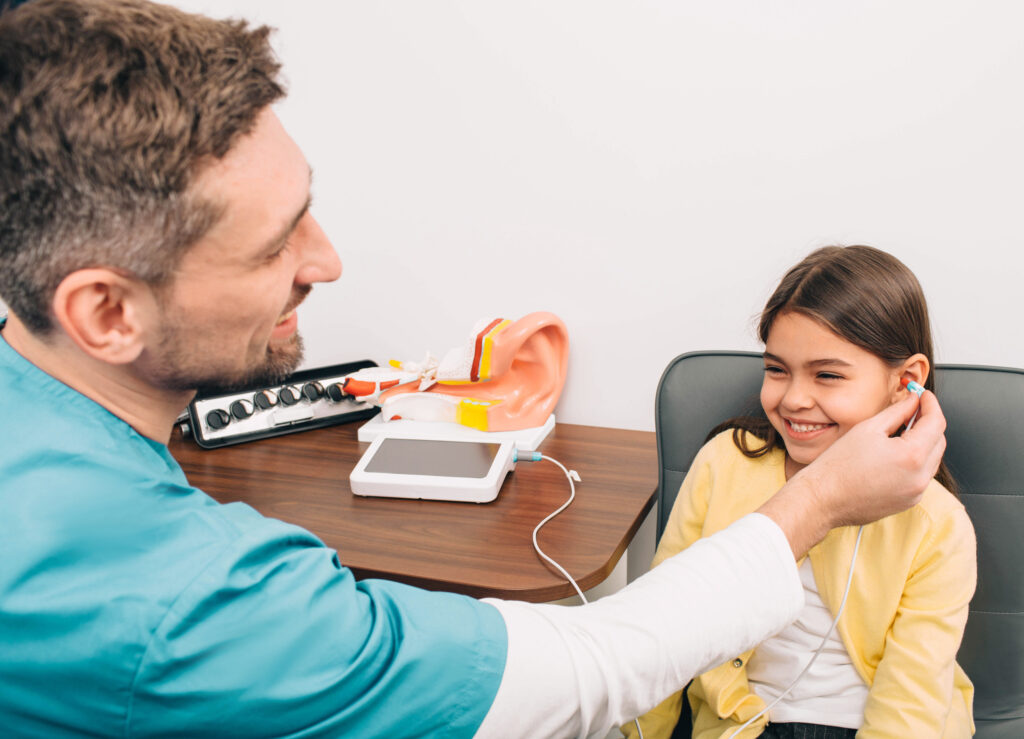
Auditory processing therapy is used to support children with Auditory Processing Disorder (APD), a condition in which the brain has difficulty interpreting and filtering sound. Children with APD may hear sounds but struggle to make sense of speech, particularly in environments with background noise such as classrooms.
The goal of auditory processing therapy is to help the brain more effectively recognize, organize, and respond to sound. Our audiologists and speech-language pathologists work closely together to evaluate auditory processing skills, identify specific areas of difficulty, and provide targeted treatment based on each child’s needs.
Depending on your child’s needs, therapy may include listening activities with background noise, targeted auditory exercises, and strategies that help improve focus, attention, and listening endurance.
Signs Your Child Might Benefit from Auditory Processing Therapy
Your child may benefit from auditory processing therapy if you notice:
- Difficulty understanding speech in noisy environments
- Frequently asking for repetition or saying “what?”
- Trouble following verbal directions
- Listening fatigue or frustration during schoolwork
- Difficulty with reading, spelling, or phonics
- Strong academic effort with inconsistent results
- A history of attention, learning, or language challenges
Reach Out Today to Get Started
If you have concerns about how your child processes spoken information, early evaluation and targeted support can make a meaningful difference. Our team is here to answer questions, explain next steps, and help you determine whether auditory processing testing and therapy are appropriate.